Showing posts with label Stress Relief. Show all posts

Sunday, July 27, 2025

Top 8 Science-Backed Ways to Improve Sleep Naturally Without Pills

In today’s fast-paced and always-connected world, millions of people are struggling to get a good night’s sleep. Whether it’s the stress of work, anxiety about the future, or just an overuse of digital devices, sleep problems have become a modern epidemic. Many people turn to sleeping pills for quick relief, but these can come with side effects and dependencies. Fortunately, there are science-backed, natural alternatives to improve sleep, safely and effectively. In this article, we’ll explore eight proven ways to enhance your sleep without needing medication.

In today’s fast-paced and always-connected world, millions of people are struggling to get a good night’s sleep.

1. Stick to a Consistent Sleep Schedule:

Our bodies are governed by a natural clock called the circadian rhythm, which controls the sleep-wake cycle. Going to bed and waking up at the same time every day, even on weekends, helps regulate this rhythm.

According to research from Harvard Medical School, a regular sleep schedule not only improves sleep quality but also reduces daytime fatigue and enhances mood. Even if you go to sleep late one night, try to wake up at your usual time the next day to stay on track.

Tip: Set a daily “wind-down” alarm 30–60 minutes before bed to signal it’s time to prepare for sleep.


2. Avoid Caffeine and Stimulants in the Evening:

Caffeine is a powerful stimulant found in coffee, tea, chocolate, soft drinks, and many energy beverages. While caffeine can improve alertness and performance during the day, consuming it after 2 p.m. can disrupt sleep for most people.

Caffeine blocks adenosine, a chemical that builds up in your brain throughout the day to make you feel sleepy at night. Even if you fall asleep with caffeine in your system, the quality of sleep tends to suffer.

Alternative: Try a calming herbal tea like chamomile, lemon balm, or peppermint after dinner instead.


3. Create a Relaxing Sleep Environment:

Your bedroom should be a sanctuary for rest. To improve your sleep environment, focus on reducing light, sound, and heat, three major sleep disruptors.

Temperature: Studies show that most people sleep best in a cool room, around 18–20°C (65–68°F).

Light: Use blackout curtains or an eye mask to block streetlights or early sunlight.

Sound: Try white noise machines, earplugs, or calming nature sounds to drown out external noise.

Also, make sure your mattress and pillow are comfortable and supportive. Investing in good bedding can dramatically improve sleep quality.


4. Limit Screen Time Before Bed:

Your smartphone, tablet, and laptop all emit blue light, which mimics daylight and suppresses melatonin, the hormone that tells your body it’s time to sleep.

A 2020 study published in the journal Sleep Health found that just 30 minutes of screen exposure before bed can delay sleep onset and reduce REM sleep. This not only makes it harder to fall asleep but also lowers the quality of the sleep you get.

What to do instead:

Use "night mode" or blue-light filters after sunset.

Avoid screens completely for at least 30–60 minutes before bedtime.

Read a book, meditate, or listen to calming music instead.


5. Try Relaxation Techniques Before Sleep:

If you lie awake at night thinking about your to-do list or replaying stressful moments, relaxation techniques can help quiet your mind and body.

Some effective methods include:

Deep breathing (4-7-8 method): Inhale for 4 seconds, hold for 7, and exhale for 8.

Progressive muscle relaxation: Tense and then slowly release each muscle group, from head to toe.

Mindfulness meditation: Sit quietly and focus on your breath, letting thoughts pass like clouds.

These techniques activate the parasympathetic nervous system (your “rest and digest” system), helping you transition from stress to sleep.


6. Avoid Heavy Meals and Alcohol at Night:

Eating a large, heavy meal or drinking alcohol too close to bedtime can interfere with your sleep.

Heavy meals can cause indigestion, bloating, and discomfort, making it hard to relax. Alcohol, while initially sedating, actually disrupts sleep later in the night, especially REM sleep, which is critical for memory and mood.

Better choices for late-night snacks:

A banana with almond butter

A warm glass of milk

A handful of walnuts or pumpkin seeds

These foods contain tryptophan and magnesium, which promote relaxation and melatonin production.


7. Get Natural Daylight and Exercise:

One of the most overlooked sleep tips is getting enough sunlight exposure during the day. Natural light helps reset your circadian rhythm and increases daytime energy, which makes you sleepier at night.

Additionally, regular physical activity has been shown to improve sleep onset, duration, and quality. But avoid intense workouts close to bedtime, as they can be too stimulating.

Aim for:

20–30 minutes of morning sunlight exposure

30 minutes of exercise (walking, yoga, cycling) during the day


8. Consider Herbal Remedies and Supplements (Safely):

There are several natural herbs and supplements shown to support better sleep:

Chamomile: Known for its calming effects, especially as tea.

Valerian root: Shown in studies to help reduce the time it takes to fall asleep.

Magnesium: A mineral that relaxes muscles and supports melatonin.

Lavender oil: Aromatherapy with lavender has been linked to improved sleep in multiple studies.

Important: Talk to your healthcare provider before starting any new supplement, especially if you’re taking medications or have a health condition.


Final Thoughts: Sleep as a Pillar of Health:

Sleep is not a luxury, it’s a necessity. Without it, your physical, emotional, and mental health all suffer. Poor sleep is linked to increased risk of heart disease, diabetes, obesity, depression, and impaired memory.

The good news? You don’t need pills to sleep better. Nature already offers powerful tools to help you restore deep, restful sleep. By implementing the habits above, you can enjoy better nights, brighter mornings, and a more balanced life.


Bonus Tips:

Keep a sleep diary to track what works and what doesn’t.

Avoid napping longer than 20–30 minutes during the day.

Use calming essential oils like sandalwood or bergamot.

Try guided sleep meditations (free on YouTube or Spotify).


👉 Read more in our post on 7 Nutrient-Rich Foods Backed by Science

👉 Read more in our post on The Power of CBT for Everyday Anxiety Relief

👉 Read more in our post on Daily Habits That Can Improve Your Mental Health

👉 Read more in our post on Natural Remedies for Anxiety and Stress Relief

👉 Read more in our post on Best Daily Habits for a Healthier Heart After 40

👉 Read more in our post on 7 Affordable Superfoods You Can Find in Local Markets

👉 Read more in our post on Top 5 Health Benefits of Drinking Warm Water Daily


Tuesday, July 8, 2025

Natural Remedies for Anxiety and Stress Relief

Anxiety and stress are common in today’s world. While medication can help, many people look for natural ways to find relief. In this post, we explore effective natural remedies and simple lifestyle tips that can help calm the mind and body.

A calming scene with herbal tea, lavender flowers, and candles for stress relief

1. Herbal Supplements for Anxiety:

Some herbs have calming properties and are used for stress relief:

👉 Ashwagandha - Helps reduce cortisol (the stress hormone)

👉 Chamomile - Soothes the mind and helps with sleep

👉 Valerian Root - Promotes relaxation and sleep

👉 Lavender - Effective in both oral form and aromatherapy

Always consult a healthcare professional before starting supplements.


2. Breathing Exercises and Meditation:

Deep breathing and mindfulness can lower anxiety levels. Try:

👉 Box breathing (inhale-hold-exhale-hold – 4 seconds each)

👉 Mindful meditation (10–15 minutes daily)

👉 Progressive muscle relaxation

These methods calm the nervous system and improve focus.


3. Daily Sunlight and Exercise:

👉 Sun exposure increases serotonin (the feel-good hormone)

👉 Exercise reduces stress hormones and releases endorphins

👉 A brisk 30-minute walk can uplift your mood naturally


4. Reduce Caffeine and Sugar:

👉 Too much caffeine or sugar can worsen anxiety. Try switching to:

👉 Herbal teas like lemon balm or passionflower

👉 Naturally flavored water with mint or fruit


5. Get Better Sleep:

👉 Sleep affects mental health. Aim to:

👉 Maintain a regular bedtime

👉 Avoid screens before sleeping

👉 Keep your room dark, quiet, and cool


6. Talk to Someone:

👉 Talking helps relieve stress:

👉 Speak with friends, family, or a therapist

👉 Keep a journal to release thoughts

👉 Join support groups if you feel alone


Final Thoughts:

Natural remedies can support your journey to a calmer mind, but they work best when paired with a healthy lifestyle and professional guidance. Everyone’s needs are different, listen to your body and seek help if needed.

👉 Read more about Top 7 Evening Habits for a Restful Night and Better Health. (Learn more)

👉 Read more about How to Boost Energy Naturally Without Caffeine. (Learn more)

👉 Read more about Top 5 Supplements to Boost Brain Power and Focus (Learn more)

👉 Read more about How to Manage Diabetes with Diet: Practical Tips (Learn more)

👉 Read more about Healthy European Breakfast Ideas to Start Your Day Right (Learn more)

Sunday, July 6, 2025

Daily Habits That Can Improve Your Mental Health

In today’s fast-paced world, taking care of your mental health is just as important as your physical health. Stress, anxiety, and emotional fatigue can affect your work, relationships, and overall well-being.

The good news is that small, daily habits can make a big difference. Here are 7 simple and effective habits that can improve your mental health:

Daily Habits That Can Improve Your Mental Health

☀️ 1. Start Your Day with Gratitude
Spend 2–3 minutes each morning thinking about things you are thankful for. Gratitude shifts your focus away from stress and brings a sense of peace and positivity.

🧘‍♂️ 2. Practice Deep Breathing or Meditation
Just 5–10 minutes of deep breathing or guided meditation can calm your mind and reduce anxiety. Apps like Headspace or Calm can be helpful.

📋 3. Stick to a Routine
Having a consistent daily routine gives your brain structure and stability. Try to wake up, eat, and sleep at the same time every day.

Your brain needs water and nutrients to function properly. Drink enough water, avoid too much sugar, and eat more fruits, vegetables, and omega-3-rich foods like walnuts or salmon.

Exercise is a powerful mood booster. Even a 20-minute walk outdoors can release endorphins and reduce symptoms of depression.

📵 6. Limit Screen Time
Too much time on social media or in front of screens can increase stress and anxiety. Set time limits, especially before bedtime, and spend more time in real-world activities.

🤝 7. Connect with Others
Talk to a friend, family member, or loved one every day — even for a few minutes. Human connection helps reduce feelings of loneliness and boosts emotional strength.

✅ Final Thoughts
Your mental health matters. These small daily habits may seem simple, but over time, they can have a powerful impact on your mood, stress levels, and overall happiness. Start with just one habit, and build from there.

Remember, taking care of your mind is an investment in your life.


📌 Related Post:


Saturday, July 5, 2025

Top 5 Breathing Exercises to Calm the Heart and Reduce Stress

Breathe Better. Live Healthier!

Top 5 Breathing Exercises to Calm the Heart and Reduce Stress

In today’s fast-paced world, stress and anxiety are silent killers, especially for heart health. But guess what? The best remedy is free and right under your nose: your breath.

Here are the Top 5 scientifically-backed breathing exercises to reduce stress, calm your heart, and bring peace to your body and mind.

🧘‍♂️ 1. Box Breathing (4-4-4-4 Technique):

Box Breathing (4-4-4-4 Technique)

Used by Navy SEALs to stay calm under pressure.

✅ How to do it:

👉 Inhale through your nose for 4 seconds
👉 Hold your breath for 4 seconds
👉 Exhale through your mouth for 4 seconds
👉 Hold again for 4 seconds

🕒 Do this for 2–4 minutes.

✅ Benefits: Lowers blood pressure, improves focus, slows heart rate


🌿 2. Diaphragmatic Breathing (Belly Breathing):

Diaphragmatic Breathing (Belly Breathing)

Breathe deeply, not shallowly.

✅ How to do it:

👉 Sit or lie down comfortably
👉 Place one hand on your chest, one on your belly
👉 Inhale through your nose, feel your belly rise
👉 Exhale slowly through pursed lips, feel your belly fall

🕒 Practice for 5–10 minutes daily.

✅ Benefits: Strengthens lungs, reduces anxiety, calms the nervous system


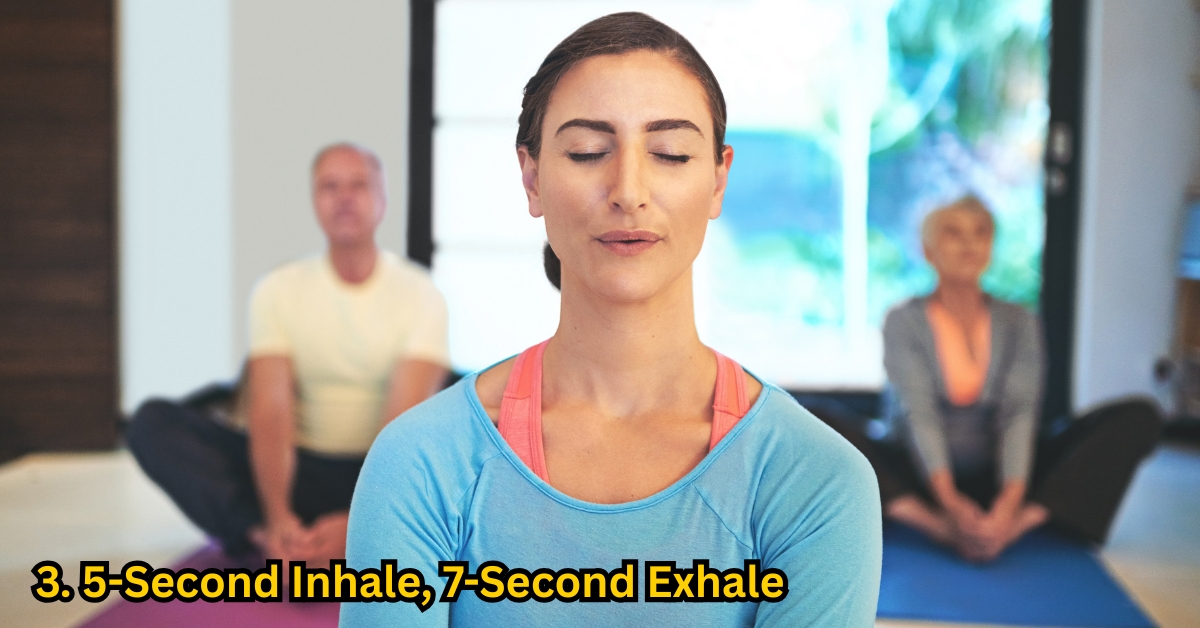
3. 5-Second Inhale, 7-Second Exhale

Focus on longer exhalation to relax your heart.

✅ How to do it:

👉 Inhale slowly for 5 seconds
👉 Exhale gently for 7 seconds
👉 Repeat 10–15 times

✅ Benefits: Reduces cortisol, supports heart rhythm, helps with insomnia


🙏 4. Alternate Nostril Breathing (Nadi Shodhana):

Alternate Nostril Breathing (Nadi Shodhana)


An ancient yoga method for mind-body balance.

✅ How to do it:

👉 Use your right thumb to close your right nostril
👉 Inhale through the left
👉 Close the left nostril with your ring finger
👉 Exhale through the right nostril
👉 Inhale through the right, close it
👉 Exhale through the left

🕒 Continue for 5 minutes.

✅ Benefits: Clears the mind, balances blood pressure, reduces panic


🌸 5. Resonant Breathing (6 Breaths Per Minute):

Resonant Breathing (6 Breaths Per Minute)

Slow, rhythmic breathing for heart-brain alignment.

✅ How to do it:

👉 Inhale for 5 seconds
👉 Exhale for 5 seconds
👉 Repeat 6 times per minute
👉 Use a calm background sound if needed

✅ Benefits: Promotes emotional regulation, lowers heart rate variability, improves sleep


💡 Why Breathing Matters:

👉 Breathing activates the parasympathetic nervous system
👉 Slows heart rate & improves oxygen delivery
👉 Helps manage high blood pressure & anxiety naturally
👉 It’s a safe, drug-free therapy anyone can practice


🔁 Sample Daily Breathing Routine:

Time                             Technique                                Duration

Morning                             Diaphragmatic Breathing        5 minutes
Afternoon                     Box Breathing                        3 minutes
Evening                             Resonant Breathing                6 minutes
Before Bed                     5-7 Breathing                        5 minutes


AirPods Pro

  AirPods Pro Premium Wireless Earbuds with Active Noise Cancellation ✓ Active Noise Cancellation ✓ Transparency Mode ✓ Spatial Audio Expe...